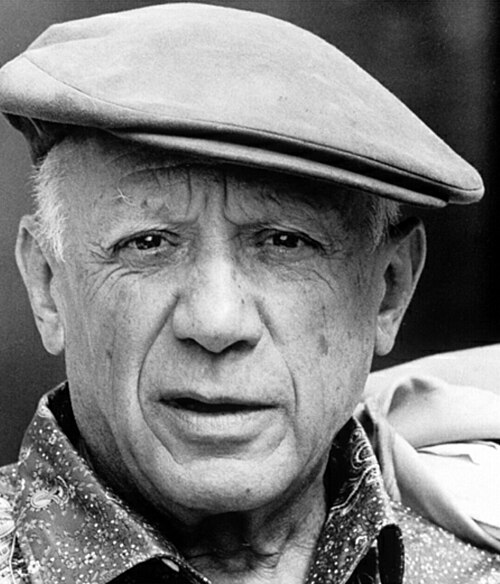
Charlie Chaplin: Career Story and Lessons
Actor and filmmaker

Charlie Chaplin began life in poverty in London and became the most famous entertainer on earth, in a medium that barely existed when he was born. As the Tramp, a gentle figure in a too-small coat, baggy trousers and a battered hat, he made audiences in dozens of countries laugh and cry without saying a word. He was also one of the first performers to take control of his own career, writing, directing, producing, editing and scoring his films, and helping to found a studio owned by artists. His story includes triumph and scandal, a political exile and a late reconciliation with Hollywood. This story follows his career from a Victorian music hall to the world stage and draws out lessons for anyone building a creative career.
Quick facts
- Category
- Artists and Entertainers
- Born
- April 16, 1889, London, England
- Died
- December 25, 1977, Vevey, Switzerland, aged 88
- Best known for
- The Tramp character; The Kid, The Gold Rush, City Lights, Modern Times and The Great Dictator
- Key roles
- Actor, director, writer, producer, editor and composer; co-founder of United Artists
- Honors
- Honorary Academy Awards in 1929 and 1972; knighted in 1975
A childhood in the music halls
Charles Spencer Chaplin was born in London into a family of music hall performers. His father, Charles Sr., was a singer and actor, and his mother, Hannah Hill, who used the stage name Lily Harley, was a singer. The couple separated when Charlie was very young, and his father, who drank heavily, provided little support. His father died in 1901, at 37, of illness linked to alcohol.
Hannah tried to support Charlie and his older half-brother Sydney by taking in sewing and working on the stage, but money was scarce. Charlie later remembered the music hall as a kind of school, a place where he learned how audiences reacted, which jokes worked and how a small gesture could earn a laugh.
The night his mother’s voice failed
A story that Chaplin often told dates from when he was five. His mother was singing in a rough theater in Aldershot when her voice cracked and the audience began to jeer. The manager brought young Charlie onto the stage to fill the gap. He sang a popular song and, when coins were thrown onto the stage, he stopped to pick them up, then improvised more jokes. The crowd loved it. It was his first performance, and it was also the last time his mother appeared on stage.
Hannah’s health, both physical and mental, declined after this period. She was admitted to a mental institution in the late 1890s and later returned to the care of her sons. Chaplin eventually brought her to California and cared for her until her death in 1928. His memories of her, and of poverty, shaped his later films, which often sympathized with the poor and the outsider.
Workhouses and the struggle to survive
When Hannah could not support the family, Charlie and Sydney spent time in the Lambeth workhouse and in schools for destitute children. Chaplin recalled hunger, cold and a sense of shame. At times he and Sydney sold flowers, ran errands and took any job they could find. These years were harsh, but they also taught him about survival and how to read people.
At nine, Charlie joined a clog-dancing group called the Eight Lancashire Lads, which toured music halls. The work earned a small income and gave him a first taste of life as a professional performer. As a teenager, he found parts in plays, including a role as a page boy named Billy in a stage version of Sherlock Holmes.
Fred Karno’s troupe
In 1908 Chaplin joined Fred Karno’s pantomime company, a famous comedy troupe that trained many performers. Karno was known for large-scale slapstick sketches and for giving his actors discipline. Chaplin became a lead player and developed a talent for physical comedy, timing and miming, the foundations of his later film work. A drunk in a sketch called “A Night in an English Music Hall” became one of his best-known roles.
The company toured the United States in 1910 and again in 1912. During the second tour, a film producer saw Chaplin’s act and sent a telegram offering him a contract. The offer came at a time when he had been thinking about whether he wanted to remain on the stage.
Keystone and the birth of the Tramp
In late 1913 Chaplin signed with the Keystone Film Company, run by Mack Sennett, at a salary of 150 dollars a week, a good sum for a young performer. His first film, Making a Living, came out in February 1914. He was not happy with the result, since he had been dressed as a flashy villain and was not allowed to follow his own ideas.
For his next project, he went to the wardrobe room and assembled a costume: trousers that were too baggy, a jacket that was too tight, shoes that were too big, a small bowler hat, a cane and a toothbrush mustache. The outfit contrasted ideas, a gentleman’s dress worn by a poor man. He said later that when he put it on he felt he knew who the character was. The Tramp first appeared on screen in Kid Auto Races at Venice in 1914.
Audiences loved the character immediately. Within months, Chaplin was directing his own shorts at Keystone and becoming a star.
Rising salaries and control
Chaplin’s fame rose so quickly that every studio wanted him. In 1915 he moved to the Essanay company for 1,250 dollars a week, and in 1916 he signed with the Mutual Film Corporation for a reported 670,000 dollars a year, making him one of the highest-paid people in the world. At Mutual, he had a studio and an unusual degree of creative freedom, and he produced some of his best short films, including The Immigrant and Easy Street.
In 1917 he signed a deal with First National for a million dollars and built his own studio in Hollywood, which still stands. Each contract increased his independence, and he took more responsibility for writing, directing, editing and producing. By the end of the decade, he had a reputation as a perfectionist who shot scenes again and again until they felt right.
Founding United Artists
In 1919 Chaplin, along with Mary Pickford, Douglas Fairbanks and the director D. W. Griffith, founded United Artists, a company designed to distribute their films and give the artists control. The four were the most famous names in the industry, and they wanted to avoid being dependent on studio bosses. The move was a landmark in the film business and made Chaplin a part-owner of a major distribution firm.
Around the same time, during the First World War, Chaplin joined Pickford and Fairbanks to sell war bonds, and some critics said that he should have joined the military. He answered that his role in public events was more valuable, and he made the film Shoulder Arms in 1918, a comedy about a soldier in the trenches.
The Kid and the move to features
In 1921 Chaplin released The Kid, his first full-length film as director, in which the Tramp finds and raises an abandoned child, played by the child actor Jackie Coogan. The film mixed comedy and emotion in a way that surprised audiences, and it was a huge success. It also reflected Chaplin’s memories of poverty and family separation.
The shift from short comedies to features was a risk, because some people doubted that the Tramp could sustain interest for more than twenty minutes. But Chaplin’s blend of laughter and sentiment turned out to work at length.
The Gold Rush and silent masterpieces
In 1925 Chaplin released The Gold Rush, set during the Klondike gold rush, which contains some of his best-known scenes: the Tramp eating his boiled shoe and the dance of the bread rolls. Chaplin said that it was the film he wanted to be remembered for. The Circus followed in 1928 and earned him a special Academy Award at the first ceremony in 1929, for versatility and genius in acting, writing, directing and producing.
The films demonstrate his craft: he planned physical gags carefully, filmed many takes and edited with care. He often began with a strong visual idea and built a story around it. Production could take months or years because he insisted on getting each scene right.
Resisting sound
When sound films arrived in the late 1920s, many silent stars struggled. Chaplin refused to give up the Tramp’s silence, believing that the character’s power lay in universal gestures that could be understood in any language. City Lights (1931) and Modern Times (1936) were made with music and sound effects but with almost no spoken dialogue. City Lights, a love story between the Tramp and a blind flower seller, is often named among the greatest films ever made, and its final scene is famous for its emotional impact.
Modern Times satirized factory work and the machine age, with Chaplin caught in the gears of a giant assembly line. It showed his interest in social themes during the Great Depression. He also composed the music for his films himself, though he could not read music and relied on arrangers to write down his melodies.
The Great Dictator
In 1940, Chaplin released The Great Dictator, his first fully spoken film, a satire of Adolf Hitler and fascism. He played a ruthless dictator, Adenoid Hynkel, and a Jewish barber who is mistaken for him. The film was made while the United States was still neutral, and many people warned Chaplin that it would be dangerous. He later said that if he had known the full horror of the Nazi camps, he would not have made it as a comedy.
The film ends with a long speech by the barber, appealing for humanity and peace, which has been widely quoted. The movie was a box-office success and earned several Oscar nominations, including for Best Picture and Best Actor.
Personal controversies
Chaplin’s private life brought him trouble. He married four times: Mildred Harris in 1918, Lita Grey in 1924, Paulette Goddard in 1936 and Oona O’Neill in 1943. Some of the marriages ended in public and expensive divorces, and the age gap in some of his relationships drew criticism then and since. In the early 1940s, a young actress, Joan Barry, filed a paternity suit against him. Blood tests showed that he was not the father, but a court still ordered him to pay child support, which angered many observers. He was also tried and acquitted in 1944 on charges under the Mann Act.
These episodes damaged his reputation in the United States and fed the press’s hostility to him.
Political suspicion and exile
Chaplin spoke out for social causes and for friendly relations with the Soviet Union during the war. In the postwar climate, he attracted the attention of the FBI under J. Edgar Hoover and was criticized as a communist sympathizer, a claim he denied. He had never become a U.S. citizen, which made him vulnerable. His film Monsieur Verdoux (1947), a dark comedy about a murderer, was poorly received by many American audiences.
In September 1952, Chaplin sailed to London for the premiere of his film Limelight. While he was at sea, the U.S. Attorney General announced that his re-entry permit was revoked, and that he would have to answer questions before being allowed back. Chaplin decided not to return. He and his wife Oona settled in Switzerland, near Lake Geneva, where they raised eight children.
Later films and return
In exile, Chaplin made two more films: A King in New York (1957), a satire on American anti-communism, and A Countess from Hong Kong (1967), with Marlon Brando and Sophia Loren, which was a commercial and critical disappointment. He also reissued his earlier films with new music scores. His music for Limelight won an Academy Award in 1973 when the film was finally shown in Los Angeles.
In 1972 he returned to the United States to receive an honorary Academy Award. The audience at the ceremony gave him a standing ovation that lasted for several minutes, and he was visibly moved. In 1975 Queen Elizabeth II knighted him, and he became Sir Charles Chaplin.
Death and legacy
Chaplin died in his sleep at his home in Vevey, Switzerland, on December 25, 1977, aged 88. A few months later, thieves stole his coffin from the cemetery in an attempt to extort money from his family. The police recovered it after about eleven weeks, and he was reburied in a concrete vault. The strange episode underlined his lasting fame.
His legacy is in the history of film itself. He helped to show that cinema could combine comedy with emotion and social commentary, and his methods influenced directors and comedians including Federico Fellini, Woody Allen and Jacques Tati. The Tramp’s silhouette remains one of the most recognizable images in popular culture.
Career lessons from Charlie Chaplin
1. Learn your craft on the job
Music halls, troupes and small roles trained him long before he was famous. Apprenticeships teach skills that school cannot.
2. Create a signature character or style
The Tramp was instantly recognizable. A clear identity helps people remember your work.
3. Take control of your work
He gradually became writer, director, producer and owner of his films. Seek ownership and responsibility as you grow.
4. Join forces with peers
United Artists gave artists shared power. Collaboration can protect independence.
5. Combine humor with human feeling
His comedies worked because they touched real emotions. Connect your work to something people care about.
6. Stay true to what works, but adapt
He held on to silence but added music and eventually speech. Know when to keep a principle and when to change.
7. Beware of public controversy
His personal conflicts and political suspicions cost him his American career for decades. Think about how your public conduct affects your work.
Conclusion
Charlie Chaplin’s career shows how talent, discipline and independence can turn a hard start into a global career, and how fame can bring conflict as well as admiration. For deeper reading, his autobiography My Autobiography (1964) and David Robinson’s biography Chaplin: His Life and Art provide detailed accounts, and the Chaplin Museum in Switzerland and the BFI archives preserve his films.